


Perovskite solar cells have emerged as one of the fastest-growing photovoltaic technologies due to their high power conversion efficiency, low-temperature solution processing, and compatibility with scalable manufacturing methods. Over the past decade, their efficiency has rapidly increased to values comparable with conventional silicon solar cells, making them one of the most promising candidates for next-generation photovoltaics.
Despite this remarkable progress, several challenges still limit large-scale commercialization. Device stability, resistance to moisture and heat, lead management, process reproducibility, and scalable manufacturing remain major research topics. Consequently, developing reliable fabrication processes that can be transferred from laboratory research to industrial production has become a key objective for research institutes, universities, and start-up companies worldwide.
MTI provides a complete portfolio of equipment covering every stage of perovskite solar cell fabrication, from material , device and module preparation to device and module characterization. Whether for laboratory research or pilot-scale production, MTI offers total solutions for coating, annealing, vacuum processing, encapsulation, and performance testing.
The following sections illustrate a typical fabrication workflow using MTI equipment.
-
Substrate Preparation
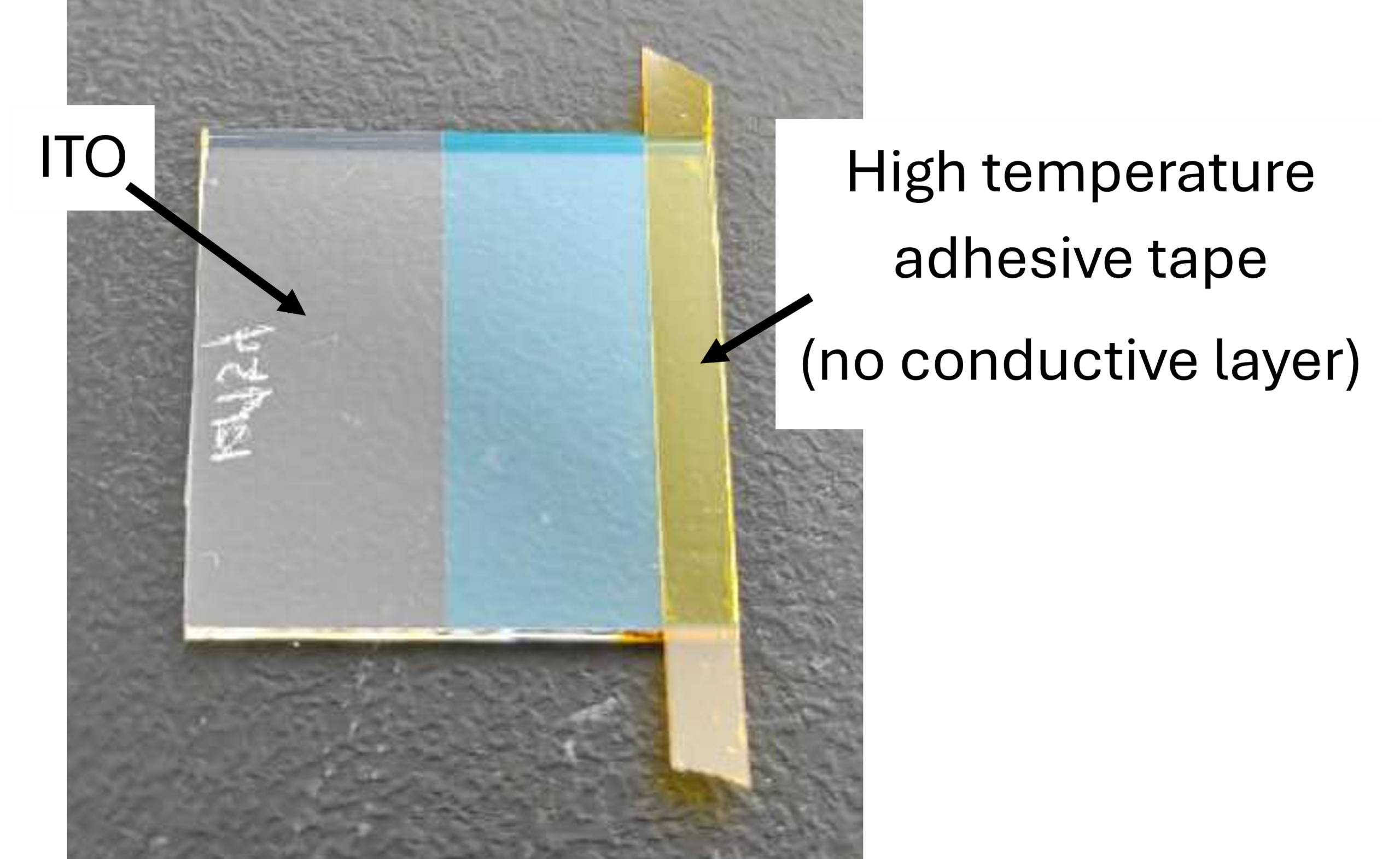
The fabrication process begins with ITO-coated glass substrates, where the transparent conductive ITO layer has already been etched.
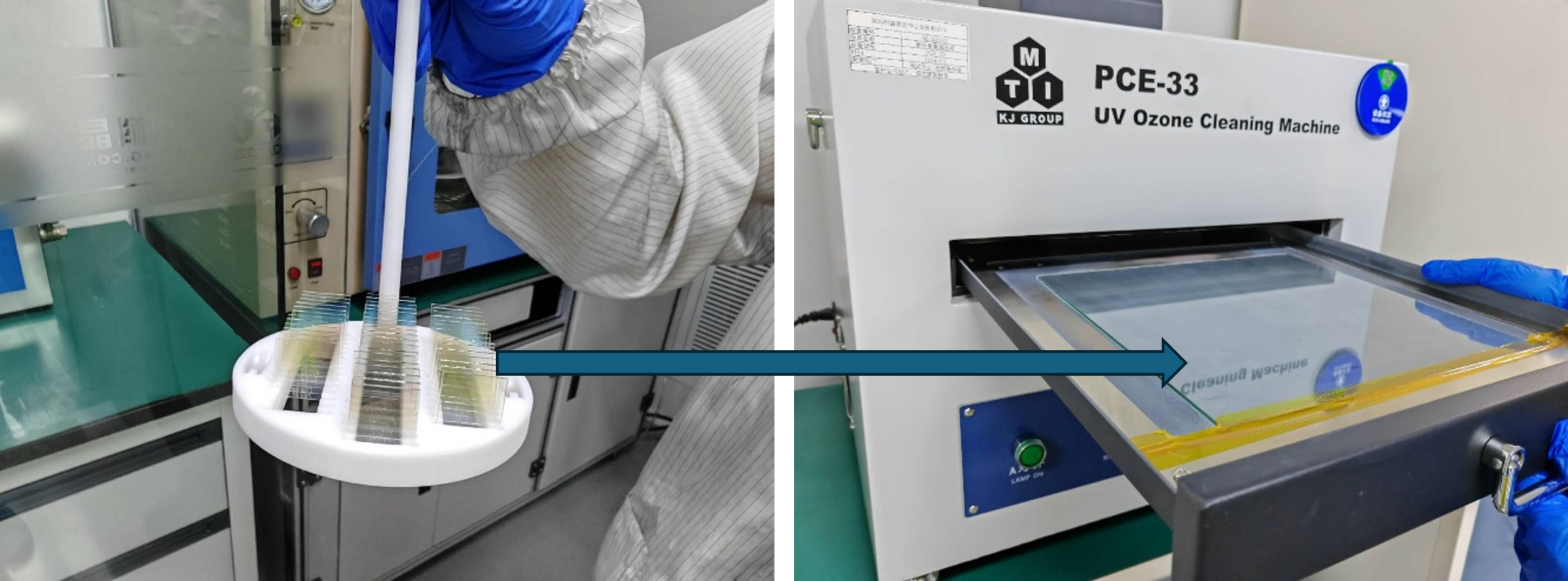
Before device fabrication, the substrates are dried in a vacuum oven (typically overnight or until completely moisture-free). They are then surface-treated using either the PCE-331 UV-Ozone Cleaner or the PCE62 Plasma Cleaner to remove organic contaminants and improve surface wettability, resulting in better thin-film uniformity.
-
Electron Transport Layer (ETL) Deposition
After surface treatment, the electron transport layer (ETL) precursor solution is deposited onto the ITO substrate.
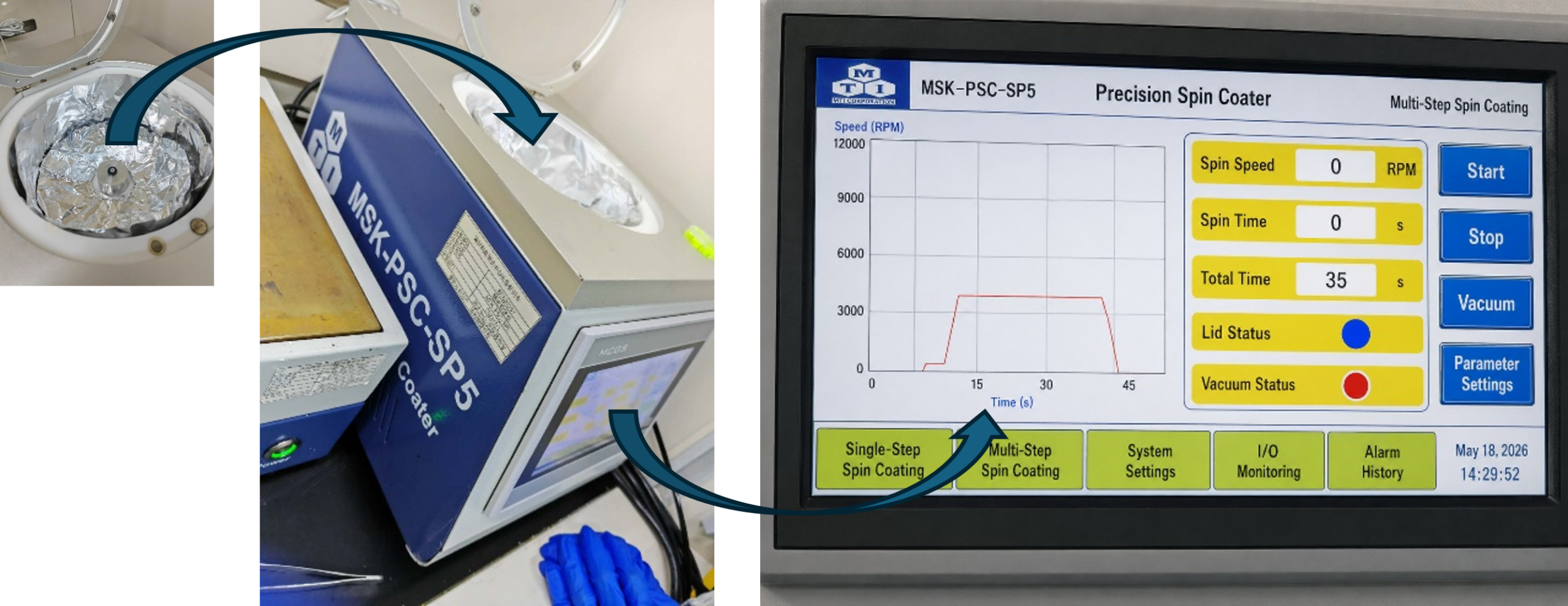
For laboratory-scale devices, spin coating is commonly used with the MSK-PSC-SP53 Precision Spin Coater, which allows precise control of:
- Spin speed (RPM)
- Spin time
- Multi-step spin programs
- Vacuum chuck holding
The programmed spin profile ensures excellent film uniformity and repeatability.
For larger substrates (for example 100 mm × 100 mm), scalable coating techniques such as doctor blade, slot-die coating, or other sheet-to-sheet processes can be performed using systems such as the MSK-PSC-SWH20204 or the MSK-PSC-MM20205.
Following deposition, the ETL film is annealed on a precision hot plate (e.g. MSK-PSP-HPL20206). Typical conditions are 150°C for approximately 30 minutes, depending on the ETL material.
After annealing, an optional UV-ozone or plasma treatment can be performed to improve the surface energy before depositing the perovskite layer.
-
Perovskite Layer Deposition
The perovskite precursor solution is then deposited using either the precision spin coater for small-area devices or a sheet-to-sheet coating system for larger substrates.
To improve crystallization, MTI offers the MSK-PSP-FE20207 Vacuum Flash-Assisted Solution Processing (VASP) System.
During the VASP process, a controlled low-vacuum environment rapidly removes volatile solvents from the wet perovskite film. This accelerates nucleation and promotes the formation of dense, highly crystalline perovskite layers with improved morphology and reproducibility.
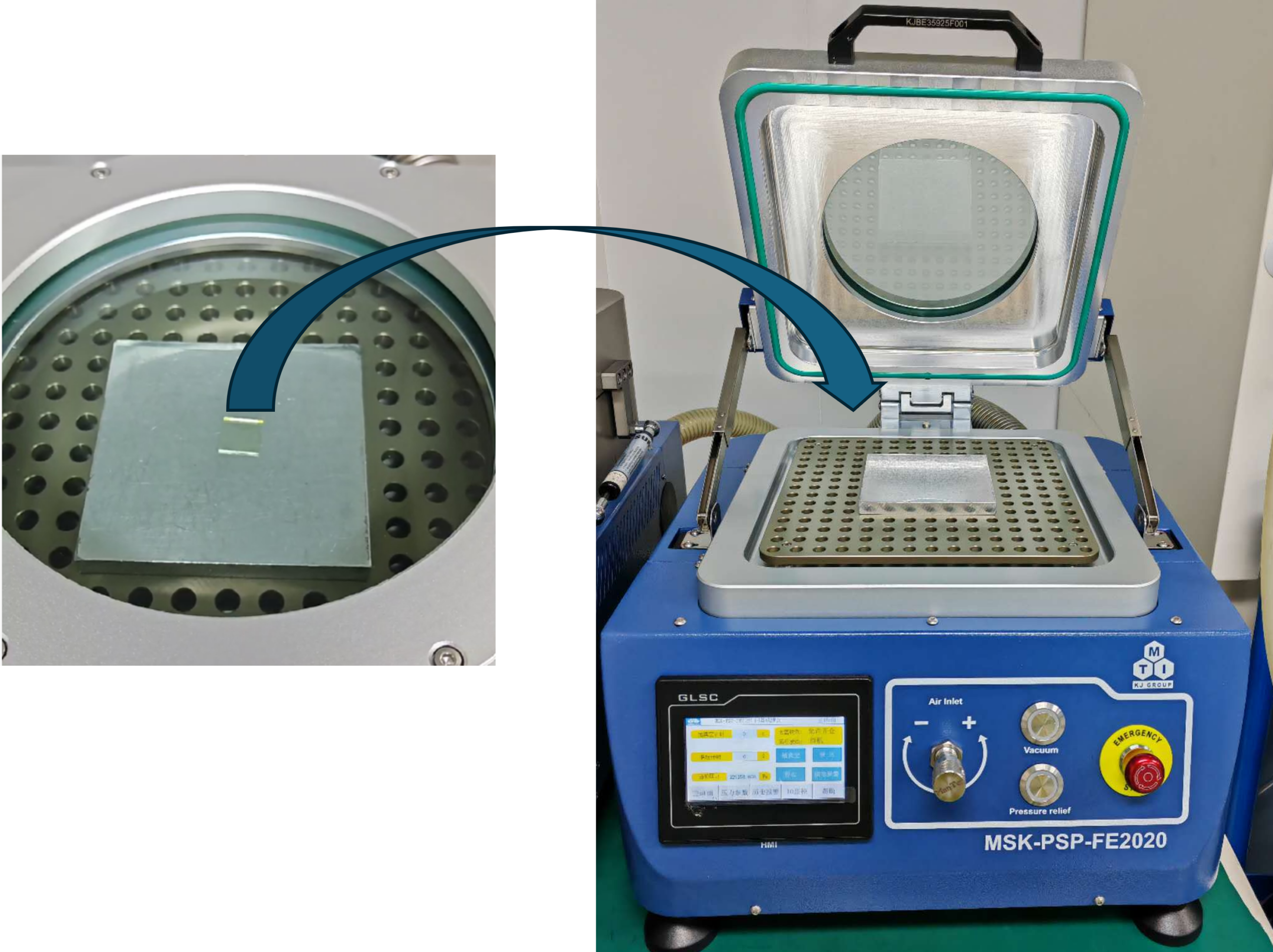
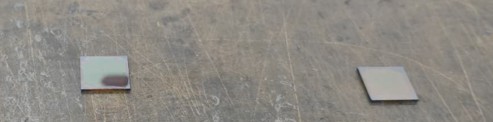
The coated film is subsequently annealed, typically at 120°C for approximately 20 minutes, during which the perovskite undergoes crystallization accompanied by a rapid color change.
The comparison below illustrates the significant improvement in film quality obtained with VASP processing compared with conventional air drying.
-
Passivation Layer Deposition
Following crystallization, a passivation layer is deposited using the same coating equipment.
The coated film is then annealed at approximately 100°C for 5 minutes to improve surface passivation and reduce non-radiative recombination losses, contributing to higher device efficiency and improved long-term stability.
- Hole Transport Layer (HTL) Deposition
The hole transport layer (HTL) is deposited inside an inert-atmosphere glovebox using either the precision spin coater or the sheet-to-sheet coating system.
After coating, the HTL is typically annealed at 100°C for approximately 5 minutes.
Performing this process inside a glovebox minimizes exposure to oxygen and moisture, which is critical for many high-performance HTL materials.
- Metal Electrode Deposition
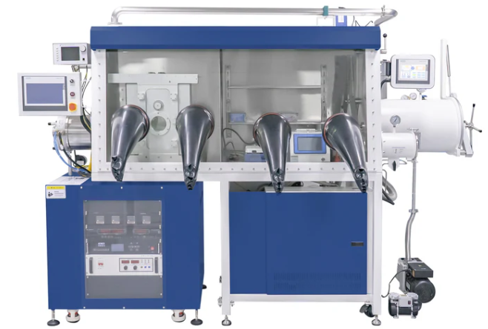
The top metallic electrode (typically Au, Ag, or other conductive metals) is deposited using thermal evaporation.
MTI’s MSK-PSE-GEC15158 Glovebox-Integrated Thermal Evaporation System enables electrode deposition without exposing the device to ambient air, helping preserve interface quality and maximize device performance.
After the perovskite layer, the spin coater or sheet to sheet coater will be used again to form the passivation layer and following 5 min at 100 °C heating. The last layer will be the hole transport layer (HTL) coated in the glove-box with spin coater or sheet to sheet coater following again by 5 min at 100 °C heating.
The metallic electrode will be coated in using the Thermal Evaporation Coater which is integrated into a glovebox MSK-PSE-GEC15158.
- Device Characterization
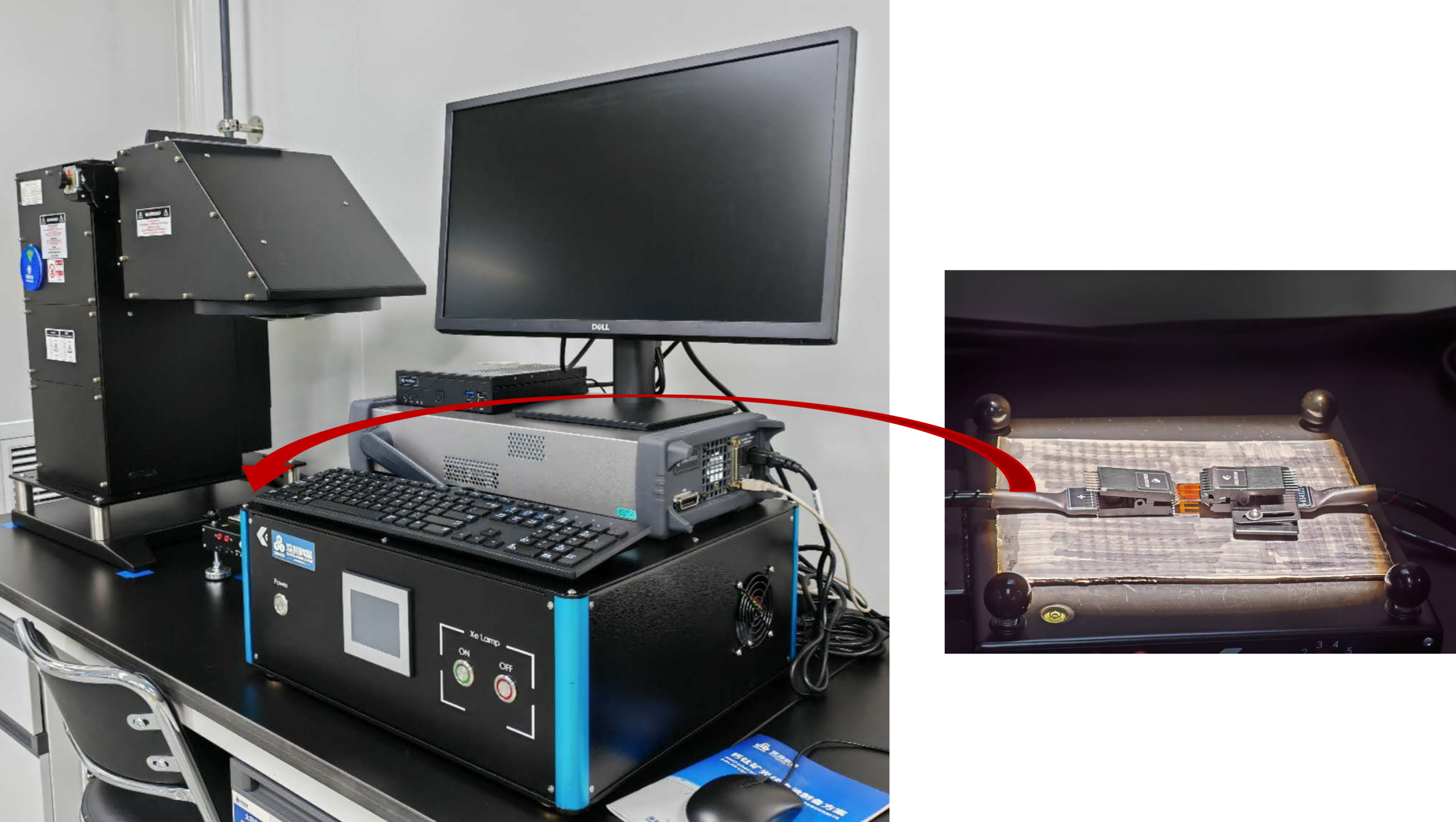
After fabrication, the completed perovskite solar cells are characterized using a calibrated solar simulator such as the MSK-SS-509.
The system measures the current-voltage (J-V) characteristics under Standard Test Conditions (AM 1.5G, 100 mW/cm², 25℃), allowing researchers to evaluate key photovoltaic parameters, including:
- Power Conversion Efficiency (PCE)
- Open-Circuit Voltage (Voc)
- Short-Circuit Current Density (Jsc)
- Fill Factor (FF)
These measurements provide a comprehensive assessment of device performance and fabrication quality.
PCE=(Pmax/Pin)×100% , FF = (Vmax × Jmax) / (Voc × Jsc)
Finally, the prepared sample will be tested under MSK-SS-508 to check its performance under Standard Test Conditions (STC).
Product link :
- UV-Ozone Cleaner PCE-33 or similar : https://mtixtl.com/en-euea/products/desktop-uv-ozone-cleaner-with-12-x-12-chamber-and-heating-stage-up-to-150c-eq-pce-22
- Plasma Cleaner PCE6 : https://mtixtl.com/en-euea/products/pce6
- MSK-PSC-SP5 or similar : https://mtixtl.com/en-euea/products/vtc100a
- MSK-PSC-SWH2020 : https://mtixtl.com/en-euea/products/msk-psc-swh2020
- MSK-PSC-MM2020 : https://mtixtl.com/en-euea/products/sheet-to-sheet-slot-die-coater-with-marble-vacuum-chuck-200-mm-200-mm-for-perovskite-solar-cells-msk-psc-mm2020
- MSK-PSP-HPL2020 : https://mtixtl.com/en-euea/products/precise-heating-plate-l200-mm-x-w200-mm-max-250-c-for-perovskite-solar-cells-msk-psp-hpl2020?_pos=1&_sid=ad1e4e38f&_ss=r
- Vacuum Flash-Assisted Solution Processing (VASP) System MSK-PSP-FE2020 : https://mtixtl.com/en-euea/products/msk-psp-fe2020?_pos=1&_sid=45d892189&_ss=r
- MSK-PSE-GEC1515 : https://mtixtl.com/en-euea/products/mskpsegec1515
- MSK-SS-50 : https://mtixtl.com/en-euea/products/msk-ss-50?_pos=1&_sid=32b7897f4&_ss=r
Contact
Feel free to contact us to discuss your specific requirements. Our team will be glad to support your project with tailored solutions.
contact@accessr-energy.eu